
How Hellstar Shorts Elevate Your Rebellious Look
Hellstar shorts condense a clear visual language—edge, attitude, and intentional imperfection—into a single garment that signals nonconformity at a glance. They do this through cut, hardware, fabric choices, and styling cues that come from punk and goth streetwear traditions. This article explains exactly which design choices create that effect and how to use them without looking like you’re trying too hard.
Hellstar shorts work because they combine recognizable rebellious elements—distressing, black-centric palettes, metal hardware, and unconventional silhouettes—with wearable construction. The brand’s approach translates subcultural codes into practical pieces you can move in during concerts, festivals, or daily wear. Below I break down materials, fits, styling, sizing, maintenance, and a short comparative spec table so you can understand why these shorts command attention.
The explanations that follow are tactical and concrete: which cuts to choose for your body, which accessories to pair, what to avoid when layering, and how to keep the distressed look from falling apart. Expect actionable statements, not vague praise. Use these guidelines to upgrade an outfit from casual to deliberately rebellious without sacrificing comfort or longevity.
This is aimed at people who want to own the look rather than imitate it—fans of punk, goth, and streetwear who care about fit, finish, and texture. If you want the specifics of how Hellstar shorts change perception and how to exploit that change intelligently, keep reading.
What makes Hellstar shorts a rebel’s staple?
Hellstar shorts act as a shorthand for rebellion because they assemble familiar visual signifiers—distress, black or high-contrast colorways, metal hardware, and DIY detailing—into a cohesive, wearable piece. Those signifiers trigger cultural associations with punk, goth, and hellstar studios shorts counterculture styles instantly. The result is a compact statement piece that reads as deliberate and authentic.
Design elements matter. Distressed hems, exposed seams, rivets, and patchwork signal a lived-in, anti-establishment vibe. Chains, safety-pin accents, and embroidered patches communicate DIY ethics and personal expression. Color choices—predominantly black with occasional red or acid-wash highlights—amplify contrast and mood, making the wearer read as serious about the aesthetic.
Fit and silhouette determine whether those signals feel aspirational or cartoonish. A balanced silhouette that complements your body—high-waist for elongation, mid-rise for casual edge, or loose cargo cuts for utilitarian grit—keeps the look grounded. The fabrics Hellstar often uses, like heavy cotton twill, coated denim, or mixed-media panels, produce structure that supports hardware and distressing without tearing prematurely.
Beyond raw visuals, Hellstar integrates streetwear vocabulary: utilitarian pockets, reinforced seams, and adjustable waist tabs that keep the shorts functional for festivals, nightly shows, or everyday wear. This practical side prevents the garment from being purely decorative and gives it the durability expected by people who live on their feet.
Finally, the brand’s selective use of ornamentation prevents visual overload. Signature touches—brass hardware, selective bleaching, asymmetrical cuts—act as focal points. When these are placed with restraint, they make the wearer look intentional, not costume-bound.
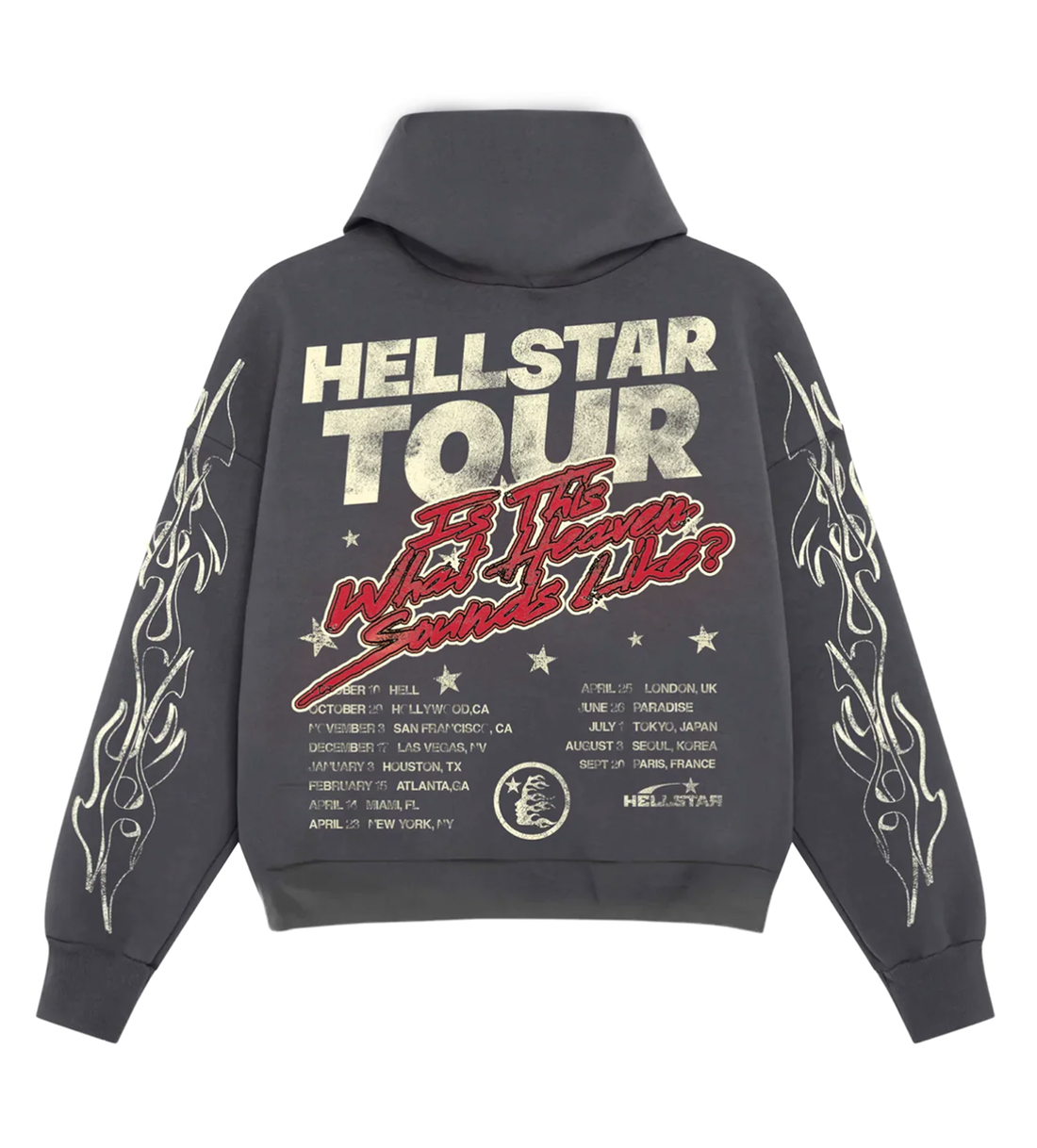
Materials, cuts and details that define the look
Hellstar’s rebellious aesthetic is built on three pillars: choice of material, deliberate distressing, and hardware placement. These three factors dictate how the shorts read from three feet and ten feet away. Understanding them lets you choose the pair that delivers the right intensity.
Material: Heavy cotton twill and rigid denim provide structure for distressed edges and attached hardware; coated or PU-finished fabrics add a leather-like sheen without sacrificing breathability; stretch blends appear more fitted but can soften the raw-edge feel. Prioritize heavier fabric if you want durable hardware attachment and a pronounced silhouette.
Cuts: High-waist cuts sharpen the waist and elongate the leg; mid-rise offers a classic rebel look tied to vintage punk; cargo and oversized cuts channel utilitarian streetwear. Distressed slim cuts read tighter and more deliberate, while oversized or baggy cuts feel effortlessly anarchic. The same detail—like a ripped hem—reads differently depending on the cut, so pick the cut that aligns with the attitude you want to convey.
Details: Chains, eyelets, grommets, and safety-pin motifs act as punctuation marks. Strategic patchwork and asymmetric hems create movement and visual tension. Color blocking with black as the base and touches of red or white creates contrast that reads loud without loud colors. Hellstar typically places hardware on the dominant side pocket or hem to create asymmetry, which human perception treats as rebellious and attention-grabbing.
Carefully chosen linings and reinforced stitching extend the life of distressing so the look remains intentional rather than worn-out. Internal reinforcements at stress points—like pocket junctions—are small but essential technical choices that keep a rebellious item functional for months of heavy wear.
How do you style Hellstar shorts without looking forced?
Styling Hellstar shorts well requires balancing a statement base with calmer complements: one bold element, one grounding element, and a finishing touch. The goal is to look composed rather than over-styled. That combination preserves the rebellious core while keeping the outfit wearable in varied settings.
Start with the silhouette. If you wear high-waist distressed shorts, pair them with a fitted cropped top or tucked-in band tee to maintain proportion; if you choose oversized cargo shorts, balance them with a slim, longline top or a structured jacket. Footwear should either contrast texture—chunky boots with light denim—or continue the theme—worn-in skate shoes with coated fabrics.
Accessories need to be deliberate. One metal-heavy piece, like a chain belt or layered necklaces, is enough; stacking multiple heavy accessories can turn the outfit into a costume. Use patches, pins, and safety-pin detailing as personal accents rather than the primary focus. Colors should be anchored in blacks and dark neutrals with one accent color—red or silver—maximum.
Layering strategies matter for seasonality and vibe: pair with sheer or mesh tops for goth-inspired looks; throw on a structured leather jacket for a modern punk silhouette; add an oversized flannel for a grungier streetwear feel. For day-to-night continuity, swap sneakers for ankle boots and add one bold outer layer to steep the outfit in attitude without overcomplicating it.
Expert tip: Avoid matching too many statement elements. If your shorts have heavy hardware and bold patchwork, choose minimal footwear and simple tops to let the shorts remain the visual anchor. Conversely, if your shorts are subtle, you can intensify the look with bolder accessories. Many people ruin a rebellious outfit by trying to “max out” every element instead of creating a clear focal point.
Sizing, fit, and practical wear
Choosing the right size and fit is critical: too tight and the rebellious details read contrived; too loose and the silhouette looks sloppy. Fit decisions determine the outfit’s perceived authenticity and comfort. Practical adjustments like waist tabs and adjustable hems make Hellstar shorts adaptable for real-world use.
When selecting size, consider intended use. For everyday wear and active settings like festivals, choose a slightly roomier fit that allows movement and breathability. For photo-ready streetwear looks, a tailored high-waist or slim fit can appear more deliberate. Measure your hips and waist against the brand’s sizing guide and account for fabric stretch—rigid denim won’t give, while blends will.
Pocket utility affects functionality. Cargo pockets increase utility but add bulk; use them when you need hands-free storage. Reinforced seams and dual-stitching at stress points are indicators that a pair can stand up to frequent wear. Be mindful of weight: heavy hardware and thick fabrics are durable but can become uncomfortable over long periods in hot weather.
Practical wear also includes mobility: test the shorts with a range of motion—squatting, climbing stairs, sitting—before committing. Adjustability features like button tabs and internal drawcords allow you to tweak fit on the fly. If you plan to wear the shorts for extended events, prioritize breathable linings and structured waistbands to avoid chafing and sagging.
When assessing authenticity, inspect how details are attached: heat-glued patches and loosely sewn studs are signs of lower quality. Reinforced attachments and metal rivets indicate long-term durability, which supports the rebellious look by preventing premature deterioration of key visual elements.
When and where should you wear Hellstar shorts?
Hellstar shorts are most effective in social settings where bold personal style communicates identity—concerts, clubs, festivals, and urban streetwear contexts. They also work for everyday wear when paired with toned-down pieces to maintain balance. The garment’s visual language is versatile within subcultural and creative scenes.
For high-energy environments like concerts and festivals, prioritize durable, breathable fabrics and secure fastenings so the shorts can handle movement. Add functional accessories like crossbody pouches or secure belt bags that align with the utilitarian aesthetic. In nightlife contexts, choose finishes with a slight sheen or coated textures that catch stage lights without looking reflective in a cheap way.
In daytime streetwear, pair Hellstar shorts with neutral, quality basics to keep the ensemble grounded. For office-adjacent creative settings, tone down distressing and avoid overtly extreme hardware; instead, let a subtle asymmetric hem or a single chain detail hint at rebellion without breaking workplace norms. Contextual judgment matters: the same shorts can read edgy in one environment and inappropriate in another.
Weather considerations: choose heavier fabrics and layered looks for cooler months; for hot weather, prioritize lighter twills and partial lining to maintain comfort. Travel with a compact repair kit—safety pins, a small sewing kit—to quickly fix minor failures in patchwork or hardware when you’re on the move.
Wearing Hellstar shorts intentionally means matching the intensity of the garment to the occasion and balancing practicality with expression so the shorts enhance your presence rather than distract from it.
Care, longevity, and ethics
Proper care keeps distressed elements intentional and extends the life of hardware and fabric. Hellstar-style shorts require a combination of gentle cleaning, targeted repairs, and responsible disposal choices to maintain their look and environmental footprint. These practices protect both your investment and the aesthetic integrity of the piece.
Washing: Turn shorts inside out, use cold water, and choose a mild detergent to preserve dyes and hardware. Avoid high-heat drying; hang-drying maintains shape and prevents metal bits from loosening. Spot-cleaning is often better for patched or embellished areas to avoid unnecessary stress on attachments.
Repairs: Reinforce loose patches and replace weakened rivets promptly. Small repairs—re-stitching hem edges or reattaching grommets—keep the distressed look deliberate rather than neglected. Carry a small repair kit when traveling to prevent a minor failure from destroying the garment’s visual integrity during an event.
Ethics and sustainability: Evaluate the brand’s sourcing and production transparency. Durable materials and repairable construction reduce waste compared with disposable fast-fashion alternatives. If sustainability is a priority, prioritize shorts made with responsible practices: organic cotton, low-impact dyeing, and modular hardware that can be removed and recycled.
End-of-life choices matter. When a pair truly reaches the end, salvageable hardware and patches can be reused; fabric can be upcycled into accessories. These small acts align with the DIY roots of punk and goth cultures and extend the garment’s useful life beyond a single owner.
Specification comparison
| Attribute | Hellstar Shorts (typical) | Generic Punk Shorts | Standard Denim Shorts |
|---|---|---|---|
| Material | Heavy cotton twill or coated denim with reinforcement | Varied (often repurposed fabrics, mixed materials) | Rigid or stretch denim (standard weights) |
| Signature details | Asymmetric distressing, metal hardware, selective patchwork | Extreme distressing, DIY patches, safety pins | Clean hems, minimal hardware |
| Fit options | High-waist, mid-rise, cargo/oversized | Mostly slim/distressed or custom-cut | Classic mid-rise, slim or relaxed |
| Durability | High (reinforcements, quality hardware) | Variable (depends on DIY construction) | Moderate to high (depends on weight) |
| Best for | Streetwear, concerts, festivals, intentional daily wear | Subculture authenticity, DIY expressions | Casual everyday wear |
Little-known facts: Punk fashion’s use of safety pins originated as a DIY solution for torn garments rather than an aesthetic choice; distressed denim became a mainstream symbol of rebellion in the late 20th century when anti-fashion elements were adopted by high-fashion houses; asymmetry in garments triggers a subconscious perception of unpredictability and boldness; metal hardware placement can redirect the eye and change how a silhouette is read.